DJ Dog is a Greentube slot built around Winny, a dog DJ performing in a bright club environment. Its presentation combines three reels, ten win lines and a music-led feature sequence.
GREENTUBE · CLUB SLOT
Symbols and Records
DJ Dog uses a tightly controlled set of visual ideas rather than an oversized cast. Winny establishes the personality, vinyl records carry the musical identity, and the club environment connects every spin to the same performance. The symbol art remains readable against neon lighting and animated background details.
- 3 reels
- 10 win lines
- 8 Lucky Spins

10
LINES
LINES
NOW PLAYING
Symbols and Records: the set at a glance
DJ Dog uses a tightly controlled set of visual ideas rather than an oversized cast. Winny establishes the personality, vinyl records carry the musical identity, and the club environment connects every spin to the same performance. The symbol art remains readable against neon lighting and animated background details. DJ Dog is easiest to understand as a character-led product with a simple core and one strongly themed feature. Winny, the records and the club setting establish personality, while the three reels and ten win lines establish the practical format. Each element reinforces the same idea, so the game remains recognizable from its title screen through the Lucky Spins sequence.
LIVE SET3 × REELS10 × LINES8 × SPINS
TRACK 01
A Compact Stage for Every Spin
DJ Dog is easiest to understand as a character-led product with a simple core and one strongly themed feature. Winny, the records and the club setting establish personality, while the three reels and ten win lines establish the practical format. Each element reinforces the same idea, so the game remains recognizable from its title screen through the Lucky Spins sequence.
For the visual hierarchy of records, club details and character art, this detail is especially useful: The vinyl motif works as more than decoration because it links the base presentation to Lucky Spins. Records are familiar objects at Winny’s decks, then become the defining content of the feature round. That continuity helps the transition feel connected to the theme: the performance narrows to its key sound, and the reels narrow to records and blank positions.
TRACK 02
How the Reel Window Communicates
The three-reel arrangement gives each outcome a strong visual centre. Rather than asking the eye to travel across a wide matrix, the game keeps symbols close to Winny’s booth and uses ten win lines to create variety inside a compact frame. Line indicators and result highlights provide the practical layer, showing where an evaluated combination travels and separating it from the surrounding club animation.
For the visual hierarchy of records, club details and character art, this detail is especially useful: Outcome feedback is delivered through symbol emphasis, line illumination and a temporary change in the movement of the screen. These signals matter in a fast three-reel game because the next action should not obscure the previous result. The interface briefly establishes what happened, updates the visible values and then returns control for the next decision.
TRACK 03
Visual Rhythm and Clear Feedback
DJ Dog balances animated presentation with a readable interface. Neon light, speaker movement and character reactions support the music theme, but current values and active controls remain distinct from decorative elements. A player can identify the selected stake, initiate a spin and open supporting game details without interpreting the background art as part of the control system.
For the visual hierarchy of records, club details and character art, this detail is especially useful: Audio is central to a DJ theme, yet it remains an adjustable part of the interface. Sound controls allow the club soundtrack and effects to be changed according to the device or environment. Visual cues continue to communicate reel movement and feature transitions, so the essential state of the game does not depend on listening at full volume.
TRACK 04
Reading the Current Game State
The vinyl motif works as more than decoration because it links the base presentation to Lucky Spins. Records are familiar objects at Winny’s decks, then become the defining content of the feature round. That continuity helps the transition feel connected to the theme: the performance narrows to its key sound, and the reels narrow to records and blank positions.
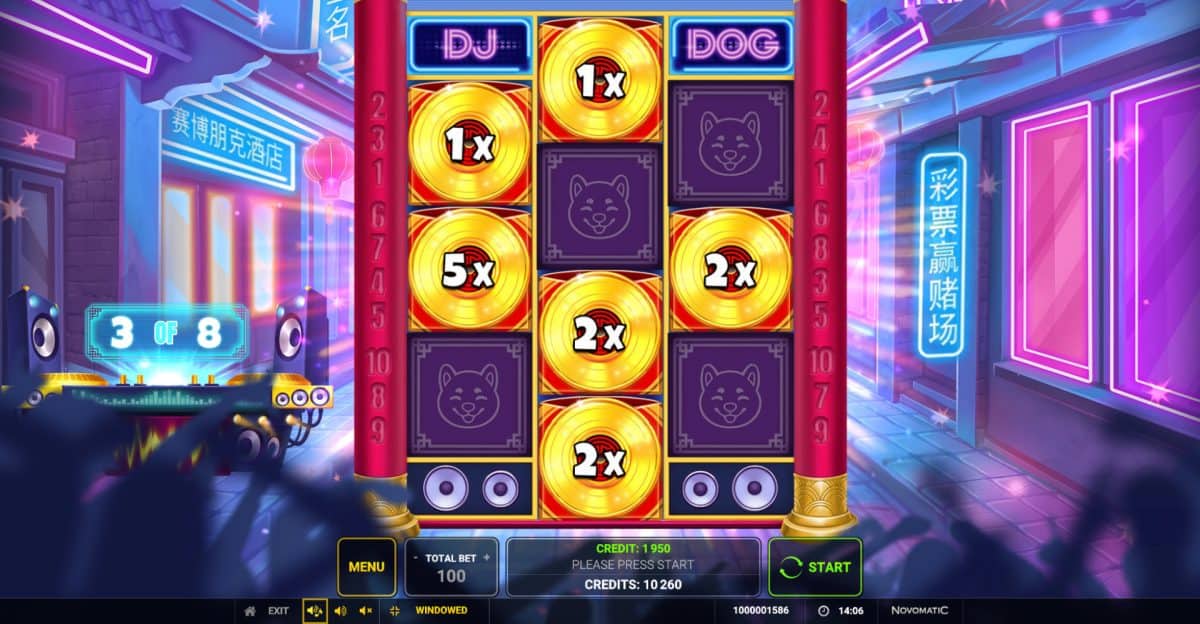
For the visual hierarchy of records, club details and character art, this detail is especially useful: Lucky Spins creates the largest structural change in the session. Eight free spins are awarded when the feature activates, and the available reel imagery becomes intentionally limited. Records and blank symbols produce a clean, recognizable bonus screen, while counters and feature labels distinguish these spins from the normal three-reel sequence.
TRACK 05
The Role of Sound and Motion
Outcome feedback is delivered through symbol emphasis, line illumination and a temporary change in the movement of the screen. These signals matter in a fast three-reel game because the next action should not obscure the previous result. The interface briefly establishes what happened, updates the visible values and then returns control for the next decision.
For the visual hierarchy of records, club details and character art, this detail is especially useful: The same core hierarchy works across a desktop monitor and a narrow phone. Larger screens give the atmosphere more room around the reels; mobile screens prioritize the reel window and touch controls. Because the grid is compact, resizing does not require removing symbols or changing the ten-line structure. The account and game menu remain available through secondary controls.
TRACK 06
Moving Between Base Play and Features
Audio is central to a DJ theme, yet it remains an adjustable part of the interface. Sound controls allow the club soundtrack and effects to be changed according to the device or environment. Visual cues continue to communicate reel movement and feature transitions, so the essential state of the game does not depend on listening at full volume.
For the visual hierarchy of records, club details and character art, this detail is especially useful: DJ Dog is easiest to understand as a character-led product with a simple core and one strongly themed feature. Winny, the records and the club setting establish personality, while the three reels and ten win lines establish the practical format. Each element reinforces the same idea, so the game remains recognizable from its title screen through the Lucky Spins sequence.
TRACK 07
Desktop and Touch-Screen Presentation
Lucky Spins creates the largest structural change in the session. Eight free spins are awarded when the feature activates, and the available reel imagery becomes intentionally limited. Records and blank symbols produce a clean, recognizable bonus screen, while counters and feature labels distinguish these spins from the normal three-reel sequence.
For the visual hierarchy of records, club details and character art, this detail is especially useful: The three-reel arrangement gives each outcome a strong visual centre. Rather than asking the eye to travel across a wide matrix, the game keeps symbols close to Winny’s booth and uses ten win lines to create variety inside a compact frame. Line indicators and result highlights provide the practical layer, showing where an evaluated combination travels and separating it from the surrounding club animation.
TRACK 08
A Focused Product Experience
The same core hierarchy works across a desktop monitor and a narrow phone. Larger screens give the atmosphere more room around the reels; mobile screens prioritize the reel window and touch controls. Because the grid is compact, resizing does not require removing symbols or changing the ten-line structure. The account and game menu remain available through secondary controls.
For the visual hierarchy of records, club details and character art, this detail is especially useful: DJ Dog balances animated presentation with a readable interface. Neon light, speaker movement and character reactions support the music theme, but current values and active controls remain distinct from decorative elements. A player can identify the selected stake, initiate a spin and open supporting game details without interpreting the background art as part of the control system.

DROP THE BEAT
Join Winny at the decks
Open the game lobby and view the current DJ Dog presentation.
QUICK REFERENCE
DJ Dog product facts
| Product | DJ Dog |
|---|---|
| Studio | Greentube |
| Format | Video slot |
| Page focus | DJ Dog Symbols: Vinyl Records and Club Artwork |
| Key elements | Winny, music stage and expanding wilds |
| Device presentation | Responsive desktop and mobile layout |
FAQ
DJ Dog questions
Winny is the central DJ character. The booth, records, lighting and animated reactions are organized around his performance, giving the reel screen a consistent host. Outcome feedback is delivered through symbol emphasis, line illumination and a temporary change in the movement of the screen. These signals matter in a fast three-reel game because the next action should not obscure the previous result. The interface briefly establishes what happened, updates the visible values and then returns control for the next decision.
The game uses three reels. This compact layout keeps symbols large and makes line highlights easy to follow on desktop and mobile displays.
DJ Dog uses ten win lines. The active line presentation and result highlights show how evaluated combinations move across the three-reel window. Lucky Spins creates the largest structural change in the session. Eight free spins are awarded when the feature activates, and the available reel imagery becomes intentionally limited. Records and blank symbols produce a clean, recognizable bonus screen, while counters and feature labels distinguish these spins from the normal three-reel sequence.
Lucky Spins is the main feature round. It changes the normal reel presentation and focuses the screen on vinyl records and blank positions.
The feature awards eight free spins when activated. A visible counter distinguishes the remaining feature spins from ordinary base-game actions. DJ Dog is easiest to understand as a character-led product with a simple core and one strongly themed feature. Winny, the records and the club setting establish personality, while the three reels and ten win lines establish the practical format. Each element reinforces the same idea, so the game remains recognizable from its title screen through the Lucky Spins sequence.
Only records and blank symbols can land during Lucky Spins. This limited set gives the round a recognizable visual structure.
The HTML-based presentation can adapt to Android browser screens, with the reels centered and important touch controls kept within reach. DJ Dog balances animated presentation with a readable interface. Neon light, speaker movement and character reactions support the music theme, but current values and active controls remain distinct from decorative elements. A player can identify the selected stake, initiate a spin and open supporting game details without interpreting the background art as part of the control system.
The compact format also suits iPhone Safari. Portrait presentation prioritizes the reels, while secondary options remain accessible from the interface.
Stake controls sit outside the symbol area with other session values. The current selection should be checked before the spin control is used. Outcome feedback is delivered through symbol emphasis, line illumination and a temporary change in the movement of the screen. These signals matter in a fast three-reel game because the next action should not obscure the previous result. The interface briefly establishes what happened, updates the visible values and then returns control for the next decision.
Yes. Audio controls allow the soundtrack and game effects to be adjusted, while reel and result states remain visible through animation and highlights.
Winning results are communicated with line and symbol emphasis. These cues separate the evaluated combination from the surrounding club artwork. Lucky Spins creates the largest structural change in the session. Eight free spins are awarded when the feature activates, and the available reel imagery becomes intentionally limited. Records and blank symbols produce a clean, recognizable bonus screen, while counters and feature labels distinguish these spins from the normal three-reel sequence.
Winny’s character, vinyl imagery, decks, speakers and neon palette create a unified club performance rather than a generic collection of music symbols.